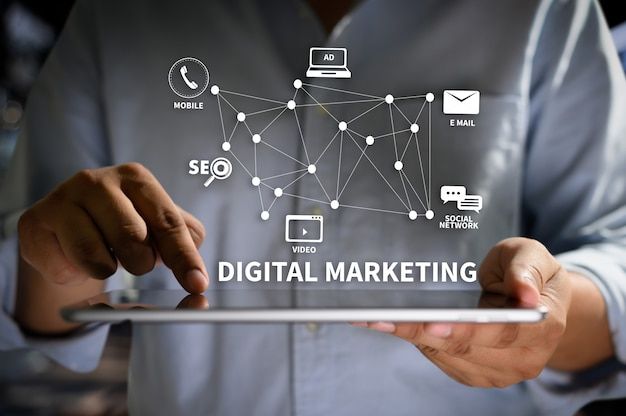
Digital marketing is the process of promoting brands, products, and services to potential customers using online platforms and digital communication channels like websites, social media, email, and search engines. It employs a data-driven approach to create personalized customer experiences and drive outcomes such as brand awareness, lead generation, and customer loyalty, offering real-time feedback and cost-effective targeting compared to traditional methods
A business is an organization or an activity that provides goods or services to meet consumer needs and wants, typically with the goal of generating profit. Businesses can be for-profit or non-profit, operate on various scales from small sole proprietorships to large corporations, and are the engines of economic development, creating jobs and fostering innovation.
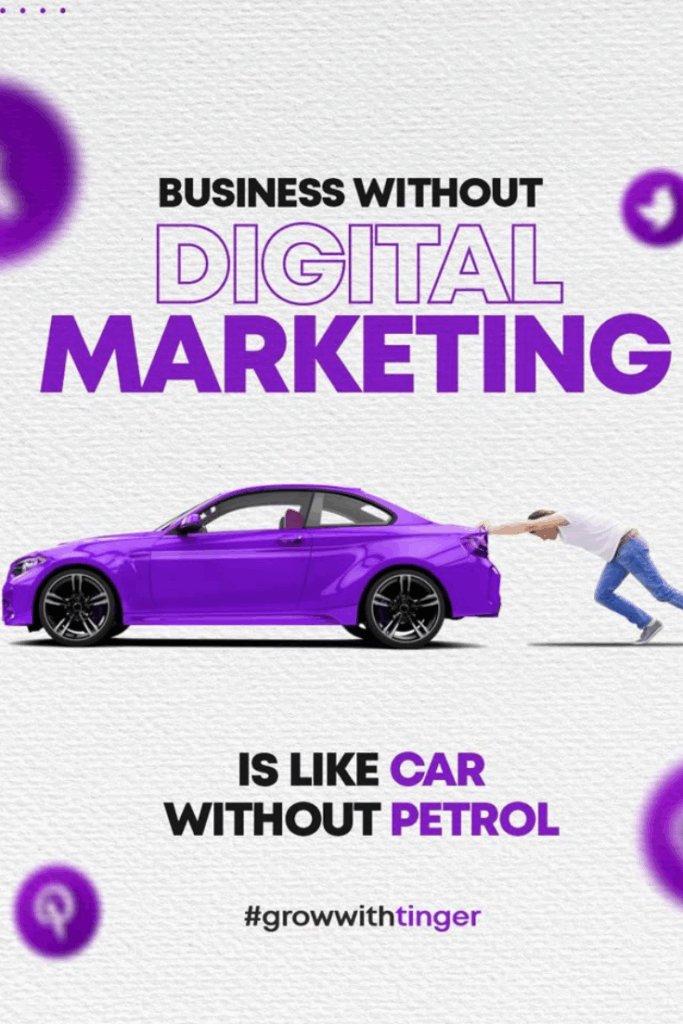
Digital marketing helps a business grow by increasing brand visibility and reach to a targeted global audience, attracting new customers by generating qualified leads, building customer trust and loyalty through engaging content and direct communication, and ultimately driving sales and revenue through cost-effective, data-driven strategies. It offers precise audience targeting, allows for accurate tracking and optimization of campaigns, provides a high return on investment (ROI), and helps businesses stay competitive and prepare for the future.
To increase business with digital marketing, define clear goals, understand your target audience, and create a comprehensive strategy involving search engine optimization (SEO), content marketing, social media marketing, paid advertising, and email marketing. Implement high-impact initiatives, build digital capabilities, and continuously monitor performance through analytics to refine your approach and maximize results.
* Global Reach – Businesses can target audiences across the world, breaking geographical barriers.
* Cost-Effective – Cheaper than traditional marketing methods like TV, print, or billboards.
* Targeted Audience – Allows precise targeting based on age, gender, location, interests, and behavior.
* Measurable Results – Tools like Google Analytics and social media insights track performance in real time.
* Personalization – Content, ads, and emails can be tailored to each user for better engagement.
* Interactive & Engaging – Involves two-way communication through likes, comments, shares, and messages.
* Multiple Channels – Includes SEO, social media, email, PPC, content marketing, and influencer marketing.
* High ROI (Return on Investment) – With proper strategies, digital marketing gives better ROI than traditional ads.
* Real-Time Customer Feedback – Quick responses from customers help businesses improve instantly.
* Mobile-Friendly – Most digital marketing strategies are optimized for mobile devices.
* Scalability & Flexibility – Campaigns can be scaled up or down quickly based on budget and performance.
* Data-Driven Decisions – Marketing strategies rely on analytics, customer behavior, and trends.
* Automation – Marketing tools allow scheduling, auto-responses, and campaign optimization.
* Brand Building – Strengthens brand identity through continuous online presence.

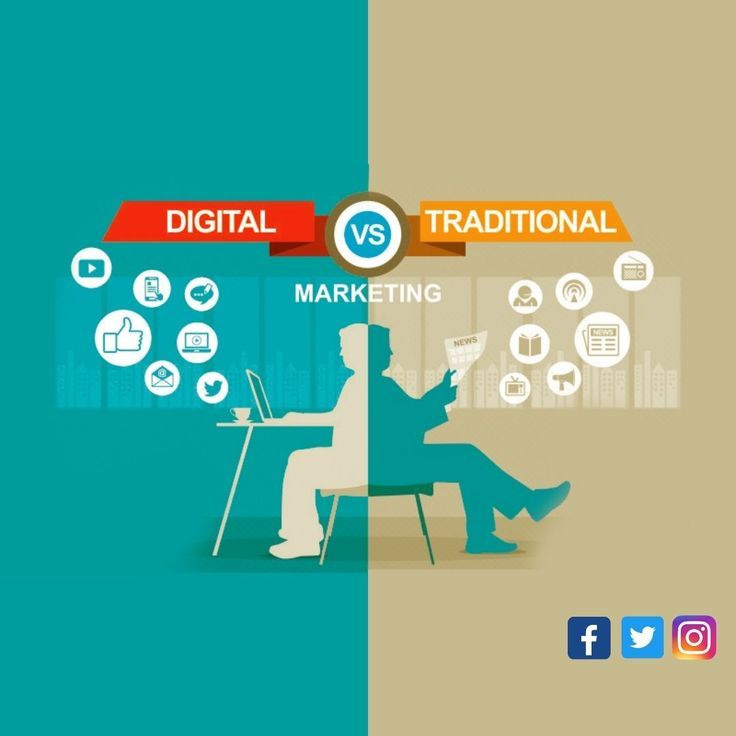
Traditional marketing uses offline channels like TV, radio, print, and billboards to reach a broad audience, while digital marketing uses online platforms like websites, social media, search engines, and email to target specific demographics with greater precision and measurability. Digital marketing offers real-time campaign adjustments, two-way communication with customers, and a global reach that traditional methods generally lack, though traditional marketing can still be effective for mass visibility and for reaching audiences who prefer non-digital channels.
Digital marketing is generally more beneficial for most modern businesses due to its cost-effectiveness, targeted audience reach, real-time measurability, higher engagement, and global reach. While traditional marketing offers advantages for building local trust and reaching specific geographic areas, its high costs, lack of precise tracking, and limited audience segmentation make it less efficient and effective than digital strategies for driving growth in today’s competitive landscape